




The Arrival of Swarming Season in Georgetown
As we enjoy the spring blooms along the San Gabriel River and the historic streets of Georgetown, another local “tradition” is beginning: Termite Swarming Season.
Between March and May, especially after a warm spring rain, thousands of winged termites (known as “alates”) take flight to start new colonies. For homeowners in the Georgetown area, seeing these swarms inside or around the house can be alarming.
Termite Swarmer or Flying Ant? How to Tell the Difference
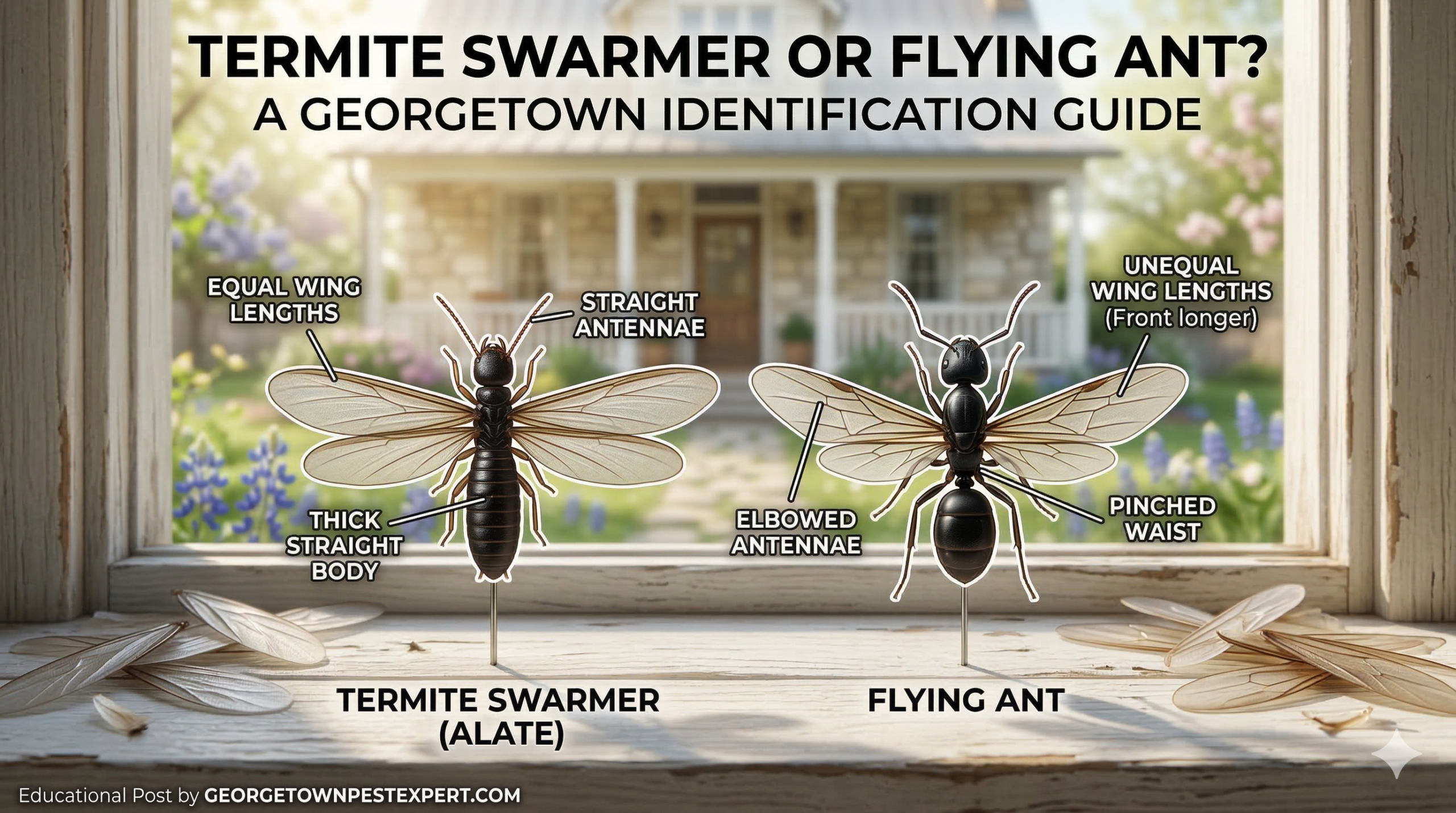
It is very common to mistake a termite swarmer for a flying ant. Before you panic, look for these three key physical differences:
- The Waist: Ants have a pinched, narrow “wasp-like” waist. Termites have a thick, straight body with no narrowing at the middle.
- The Wings: Both have four wings. However, an ant’s front wings are longer than its back wings. A termite’s wings are all the same length and are much longer than its body.
- The Antennae: Ants have “elbowed” or bent antennae. Termites have straight, beaded antennae that look like tiny strings of pearls.
Why Georgetown Homes are at Risk
Georgetown’s unique mix of historic wood-frame homes in the downtown district and new construction in the surrounding limestone hills makes our area a prime habitat for Subterranean Termites. These pests live in the soil and build “mud tubes” to reach the wooden structures of your home.
3 Signs of Termite Activity to Watch For This March
Since you are likely spending more time in the yard or starting spring cleaning, keep an eye out for these red flags:
- Discarded Wings: After swarming, termites shed their wings. You might find piles of small, translucent wings on windowsills, near doorways, or in spider webs.
- Mud Tubes: Look at your home’s foundation. Small, pencil-width tubes made of mud running up the concrete are a clear sign of termite transit.
- Soft Wood: Tap on window frames or baseboards. If they sound hollow or the wood feels “spongy,” it may indicate internal damage.
Informative Tips for Homeowners
While waiting for the professional season to kick into high gear, you can take these steps to make your Georgetown property less attractive to termites:
- Clear the Perimeter: Ensure mulch, firewood, and dead leaves are at least 15-20 inches away from your foundation.
- Fix Drainage: Termites love moisture. Make sure your gutters are clear and that rainwater is directed away from the house.
- Ventilation: Ensure crawl spaces and attics have proper airflow to prevent the humidity that termites crave.
Final Thoughts
Finding swarmers inside your home is usually a sign that a colony is nearby, but it doesn’t mean your home is lost. Staying educated on what to look for is the best way for Georgetown residents to stay ahead of the “Spring Swarm.”




Leave a Reply